I recently relocated and I really missed the convenience of having wired ethernet in each room. Sure I have an Apple AirPort Extreme Base Station that does 802.11ac, but I still have some devices such as TiVo Mini (review coming soon) that require a hardwired connection. Yes I could go with ethernet over power lines or Moca, but nothing beats gigabit ethernet if you can do it. The challenge was running a cable from living room to my office, from my living room to my master bedroom and not being able to see the cables once in place. Category 6 Ethernet cables are traditionally thick and well, ugly. Sure you can get them in different colors or paint them, but they are still very very noticeable. Some even run them under the carpet or rug and still see a “bump”, not to mention eventually wearing the cable out with foot traffic. My plan was to take the longer route along the wall and baseboard, but tucked in and out of sight. To do this I needed a “flat” ethernet cable.
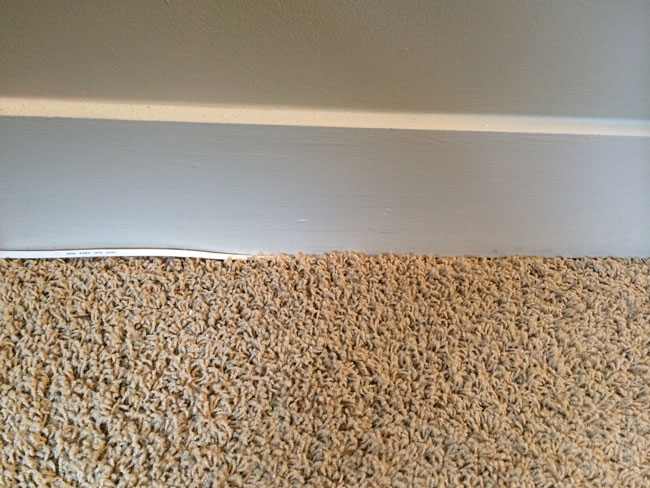
On the left of this pic you see the cable and on the right you don’t.
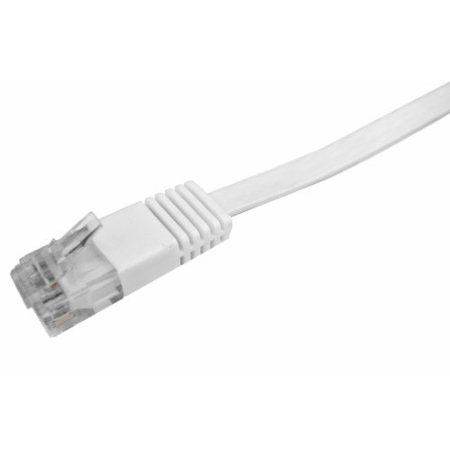
I ended up going with a couple of these 50′ white one from Amazon. Although I love buying cables from monoprice.com as they are almost always cheaper, but they only had black ones and at some point the cable does need to come up from the floor and attach to something. White would just looked better and less noticeable than a black cable since the point was all about hiding it. Once installed the cables performed just like regular Cat 6 Ethernet cables and I’m happy to have a more secure network that is faster than the fastest WiFi. Although gigabit speed is not a concern for TiVo or Apple TV since they don’t even have gigabit ethernet ports anyway, it’s nice in my office where my MacBook Pro 15″ Retina Display is plugged in while I work and getting gigabit speeds via my Belkin Thunderbolt Express Dock to my Mac OS X file server with Drobo 5D as well as my Drobo FS.
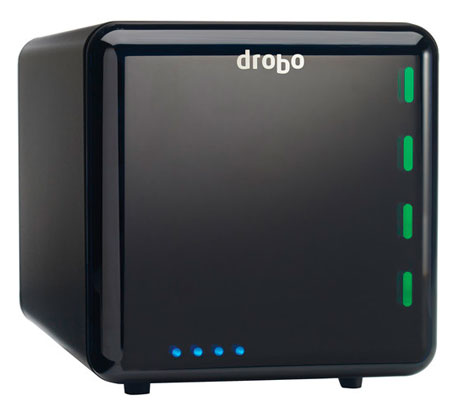
Drobo recently introduced their third generation 4-bay enclosure and I thought I’d take a look. I’ve been using Drobo storage units since 2008 (see my first review here). As a matter of fact that first unit is still in use today. Now I have five of them in total between home and my studio. So far to date I haven’t had any hardware issues with my Drobo units. They have actually performed quite well. I did have a directory corruption problem early on that required me to reformat and restore from a backup, but that could have happened on any drive. Other than that one incident my five Drobo enclosures have worked just fine. I know that some, including my buddy Scott Kelby have not been so lucky. As a matter of fact Drobo has gone through some major changes (for the better) as a company as a result. With that said and since I’ve not had any real issues I continue to use their products.
What’s New?
The new third generation 4-bay enclosure gets back to the basics. It reminds me of my first Drobo, only it’s cheaper and faster with a more solid design. With this new model you can put anywhere from 1 to 4 drives in it of any capacity. Of course you’re going to want to put at least two drives in it to get the data protection features. It has one interface on the back: USB 3. Aside from the USB 3 connection it looks and feels just like any other Drobo, but there are a couple of other things under the hood. It has a Power Fail Protection feature that protects the data you were transferring in the middle of a power outage. It also now sports a new Time Machine feature that lets you create a backup-specific volume. This is handy when you don’t want Time Machine to eat up all the available space.
You can configure it up to 24 TB
Why Drobo?
I get this question all the time. Certainly there are less expensive RAID systems out there that are not proprietary. I went with Drobo for the following reasons:
Beyond RAID (their technology) means that I can mix the drive capacities. As the price of 4TB drives continue to drop, for example, I can replace my 2 and 3 TB drives without doing them all at once.
I can swap out a drive without having to stop the work or reformat. If I need to replace a bad drive or increase the total storage capacity, I can just eject a drive and replace it with another (potentially larger) one.
I don’t have to be an IT expert to manage it. It sits in my server closet and just runs 24/7. If anything goes wrong it sends me an email.
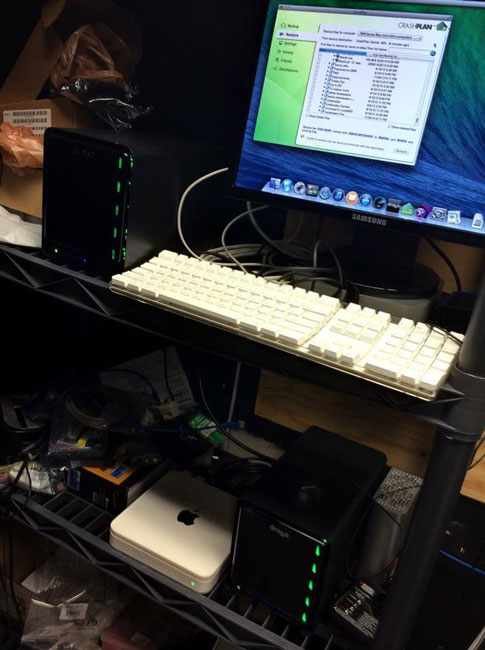
My messy, but functional server closet with a Drobo 5D up top connected to a Mac mini server and the Drobo FS below backing up stuff
What if it fails?
I’ve heard the horror stories. As a matter of fact you’d be hard pressed to find ANY product that someone doesn’t have a horror story about. However, I don’t rely on or totally trust ANY single solution when it comes to my data. No matter who makes my storage units or how great their reputation is, I’m going to have my data backed up in multiple places including an offsite backup via crashplan.com. So if it failed tomorrow, I’d probably replace it with another one as nothing lasts forever and it will die someday. My favorite model is the Drobo 5D. This baby is fast and is connected via Thunderbolt to my Mac mini server. Again, I haven’t had a moment’s problem out of it since the day I turned it on. It’s been running 24/7 since day one.
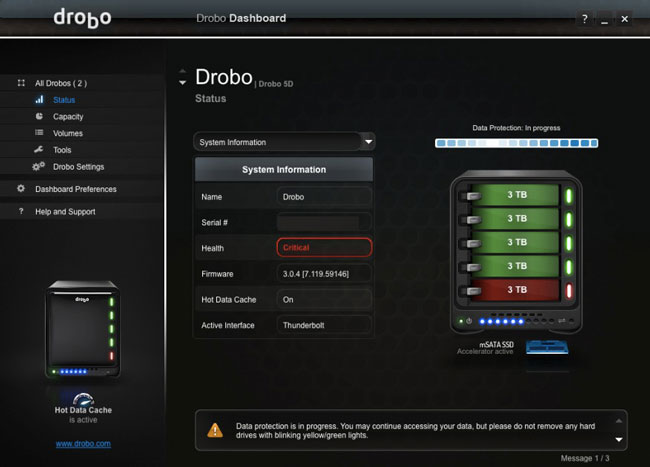
Although my Drobo units haven’t failed, my hard drives have! Here’s what Drobo does when a drive fails:
I got an email that the 5th drive was failing. I ordered a new one. It arrived in a couple of days. I ejected the bad one and put the new one in. I kept working the whole time. If you’re super paranoid you can set it to protect you against TWO drive failures. This will reduce your total available capacity, but two drives could die at the same time and your data would still be protected.
You can get the NEW 3rd Generation Drobo here for $349 or less. Drobo increased their warranty period from one year to two years.